
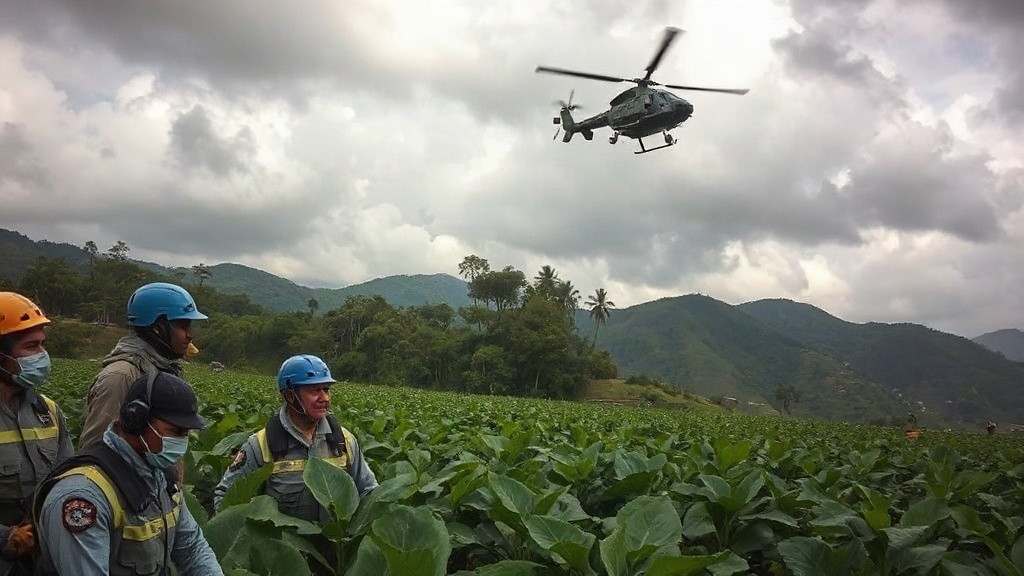
Secretary of State Marco Rubio will make a high-stakes push during his upcoming visit to Colombia, pressing the country's new leader to take aggressive action against the cocaine trade that continues to fuel addiction and violence across the Americas. The trip, confirmed by U.S. officials, places the narcotics issue squarely at the top of the bilateral agenda. For Colombians and Americans alike, the outcome could reshape a partnership that has weathered decades of shifting strategies, political friction, and an ever-evolving drug market.
Rubio's visit comes at a delicate moment. Colombia has long been Washington's closest ally in the region's drug war, yet frustration has mounted over record coca cultivation and cocaine production. The new president, who took office promising a fresh approach to security and rural development, now faces direct pressure from the United States to deliver measurable results. Behind closed doors, Rubio is expected to be blunt: without a renewed commitment to eradication, interdiction, and prosecution of traffickers, U.S. support could wane.
Why Colombia Remains Central to U.S. Drug Policy
Colombia remains the world's largest producer of cocaine, a reality that has persisted despite billions of dollars in U.S. assistance and decades of military-led eradication campaigns. The country's rugged terrain, weak state presence in remote areas, and deep-rooted illegal economies make it a formidable challenge. U.S. officials argue that as long as Colombian cocaine flows northward, American communities will bear the cost in overdoses, crime, and strained public health systems. Rubio's mission is to translate that urgency into concrete commitments.
The Secretary of State is expected to raise three core demands: a significant expansion of manual eradication of coca crops, renewed aerial spraying where feasible, and stronger action against high-level traffickers who operate with relative impunity. Colombian officials have signaled openness to dialogue but also emphasize that forced eradication alone cannot solve the problem. They point to the need for alternative development programs and security guarantees for communities that abandon coca cultivation.
The Political Tightrope for Colombia's New Leader
Colombia's new president campaigned on a platform that included rethinking the war on drugs, arguing for a greater focus on public health and social investment. That stance resonated with rural voters who have borne the brunt of violence and economic marginalization. However, it also created friction with Washington, where a more traditional enforcement-first approach still holds sway. Rubio's visit will test whether the new administration can balance domestic promises with external expectations.
Political analysts in Bogotá note that the president's room for maneuver is limited. A significant drop in U.S. cooperation would jeopardize funding for security forces, judicial reform, and rural development projects. At the same time, appearing to cave to American pressure could alienate his base and hand ammunition to political rivals. The art of the possible may lie in a package deal: Colombia agrees to intensified interdiction and targeted eradication, while the U.S. pledges increased support for crop substitution and community policing.
Trafficking Networks Have Adapted
The cocaine trade has evolved dramatically since the days of Pablo Escobar and the Medellín cartel. Today's trafficking networks are fragmented, highly mobile, and deeply embedded in local economies. They use semi-submersible vessels, clandestine airstrips, and encrypted communications to move product. Colombian authorities have scored notable victories, capturing or killing several top kingpins in recent years, but the overall flow remains robust. Rubio is expected to push for more intelligence sharing and joint operations targeting the financial infrastructure of these groups.
One U.S. official familiar with the planning said Rubio will emphasize that the fight is not just about seizures but about dismantling the entire supply chain. That means going after money laundering networks, precursor chemical suppliers, and corrupt officials who facilitate the trade. The message will be clear: Colombia cannot do it alone, but it must do more. The U.S. is prepared to assist, but only if there is genuine political will.
What Success Would Look Like
Success in this context is unlikely to be defined by a single metric. Rather, U.S. officials will look for a combination of indicators: a sustained reduction in coca cultivation, a higher rate of interdiction at sea and on land, and more prosecutions of high-value targets. They will also watch for signs that the Colombian government is serious about tackling corruption within its security forces, a persistent obstacle that undermines even the best-intentioned policies.
For Rubio, the visit is an opportunity to reset a relationship that has drifted in recent years. He is known for a hard-nosed approach to foreign policy, but also for pragmatic deal-making. His team has signaled that while the U.S. will not dictate Colombia's internal policies, it expects a partner that shares the burden. The cocaine trade, he has said, is not a Colombian problem or an American problem; it is a shared threat that demands a shared response.
The Human Cost Behind the Numbers
Behind the statistics are human stories. In Colombia, coca-growing families often have no viable alternative to make a living. In the United States, fentanyl has overshadowed cocaine in recent overdose data, but cocaine-related deaths remain a persistent concern, particularly when combined with opioids. Rubio is expected to acknowledge this complexity, but his primary message will be focused on enforcement and supply reduction. Some critics argue that a purely supply-side approach has failed for decades and that demand reduction at home deserves equal attention.
Nevertheless, the political reality is that both governments face pressure to show progress. For Rubio, a successful visit could bolster his standing as a tough, effective diplomat. For Colombia's president, it could unlock much-needed resources and signal that his administration is serious about security. The risk is that promises made in Washington or Bogotá will not translate into results on the ground, leaving both sides frustrated and the cocaine trade as resilient as ever.
Regional Implications
Colombia's role extends beyond its borders. Neighboring countries, including Ecuador, Venezuela, and Peru, are increasingly affected by the spillover of trafficking routes and organized crime. A stronger Colombian effort could push traffickers into more vulnerable states, creating new challenges. Rubio is likely to raise the need for regional cooperation, including intelligence sharing and joint patrols. The U.S. has already deepened security partnerships with Ecuador and others, but Colombia remains the linchpin.
There is also the question of Venezuela's role. The ongoing political and economic crisis there has created a haven for some trafficking groups and corrupt officials. Rubio, a vocal critic of the Venezuelan government, may link the two issues, arguing that a stable, secure Colombia is essential to countering regional instability. This broader framing could appeal to Colombian officials who worry that their country is being asked to shoulder an unfair burden.
What Comes Next
After the meetings, both sides are expected to issue a joint statement outlining areas of cooperation. The real test will be in the months that follow. Will eradication numbers rise? Will more traffickers be extradited to the United States? Will alternative development programs reach the most remote areas? Rubio and his team will be watching closely, and so will the American public. For now, the visit represents a moment of renewed focus on a problem that has defied easy solutions for generations.
Observers note that the U.S. has limited leverage if Colombia's government chooses a different path. But Rubio is likely to make clear that the partnership is not unconditional. The cocaine trade, he will argue, is a threat to both nations, and inaction is not an option. Whether that message resonates in Bogotá remains to be seen.
Frequently Asked Questions
Why is Marco Rubio visiting Colombia now?
Rubio's visit is part of a broader effort to recalibrate U.S. relations with key Latin American partners. Colombia's new president has signaled a shift in drug policy, and Washington wants to ensure that counter-narcotics cooperation remains a priority. The visit is also an opportunity to address other bilateral issues, including trade and regional security.
What specific actions is the U.S. asking Colombia to take on cocaine?
The U.S. is urging Colombia to expand manual eradication of coca crops, consider resuming aerial spraying, and intensify efforts against high-level traffickers and their financial networks. Washington is also seeking stronger anti-corruption measures within Colombia's security forces and judicial system.
Has Colombia's new president changed the country's drug policy?
The new president has emphasized a more holistic approach, including rural development and public health, while still supporting law enforcement. However, he has been less enthusiastic about forced eradication and has called for a reassessment of the war on drugs. This has created some tension with Washington, which favors a tougher enforcement stance.
How does the cocaine trade affect the United States?
Cocaine remains a significant public health and safety concern in the U.S., contributing to addiction, overdose deaths, and drug-related violence. While fentanyl has become a larger driver of overdoses, cocaine still fuels crime and strains health systems. Reducing the supply from Colombia is seen as one part of a broader strategy to address the crisis.
What are the chances of a major policy shift after this visit?
Analysts believe a major shift is unlikely in the short term. Both sides have incentives to reach a pragmatic agreement: Colombia needs U.S. support, and the U.S. needs Colombia's cooperation. Expect modest, measurable commitments rather than a dramatic overhaul of the existing framework.