
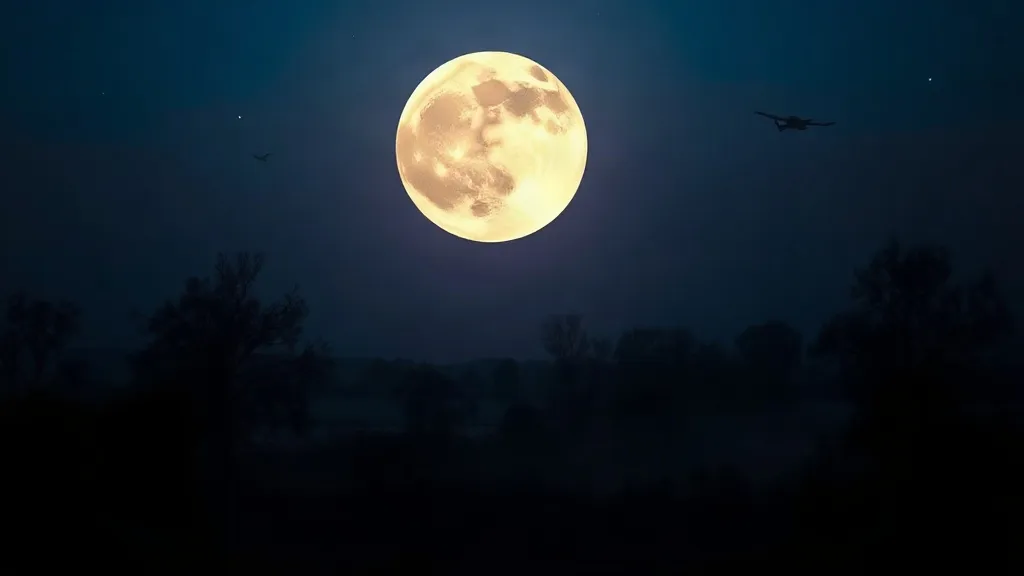
This weekend, skywatchers are in for a treat as October's full Moon, traditionally known as the Hunter's Moon, takes center stage. Rising on Sunday night, this celestial event promises to be a stunning sight, weather permitting. But beyond its visual appeal, the Hunter's Moon carries a rich history and offers a perfect opportunity to connect with the night sky.
What Makes the Hunter's Moon Special?
The Hunter's Moon is the first full Moon after the Harvest Moon, which is the full Moon closest to the autumnal equinox. In most years, that makes it the October full Moon, though occasionally it falls in November. The name itself has agrarian roots: after the harvest, hunters would use the bright moonlight to spot animals like deer and foxes preparing for winter. This practical origin story is a reminder of how deeply our ancestors relied on the Moon's cycles.
What sets the Hunter's Moon apart from other full Moons isn't just its name but its behavior in the sky. Around this time of year, the Moon rises unusually early in the evening for several consecutive nights. This happens because the angle of the Moon's orbit relative to the horizon is shallow, causing the Moon to appear to rise at nearly the same time each night. That extra dose of evening moonlight was a boon for hunters and farmers alike, extending their working hours without the need for artificial light.
The Science Behind the Name
While the name "Hunter's Moon" is steeped in folklore, the phenomenon is purely astronomical. The Moon doesn't change its behavior; it's our perspective from Earth that shifts. As the seasons change, the path of the Sun and Moon across the sky changes, and the Hunter's Moon's early rise is a beautiful consequence of orbital mechanics. It's a great example of how celestial motions have shaped human culture and language.
When and How to See It
The full Moon officially occurs at a specific moment, but to the casual observer, it will appear full for about three days centered on that peak. This weekend, the Moon will rise around sunset and set around sunrise, making it visible for most of the night. For the best view, find a location with a clear eastern horizon and minimal light pollution. No special equipment is needed; the Moon is one of the few celestial objects that actually looks better to the naked eye than through a telescope, as the full disk can be too bright for detailed viewing.
If you want to capture a photo, a smartphone can do a decent job, but a camera with a telephoto lens will give you more detail. To avoid a blurry image, use a tripod or steady your phone on a stable surface. And don't forget to check the weather forecast; a clear sky is essential for the best experience.
Weather Prospects
As with any skywatching event, the weather is the wild card. While it's too early to predict with certainty, typical October weather in many regions brings a mix of clear nights and cloud cover. Keep an eye on local forecasts as the weekend approaches. If clouds threaten, don't despair; the Moon will still be visible through thin clouds, and sometimes a partly cloudy sky adds drama to the scene.
The Moon's Influence on Nature and Culture
Full Moons have long been associated with changes in animal behavior, from increased activity among nocturnal creatures to the spawning of corals. While some of these connections are more folklore than fact, the Hunter's Moon in particular coincides with many animals' preparations for winter. Deer, for instance, are more active during the rut, and the bright moonlight may aid hunters in spotting them. This interplay between Moon and wildlife is a reminder of the intricate ties between Earth and its satellite.
Culturally, the Hunter's Moon has inspired artists, poets, and musicians for centuries. Its brilliance and timing have made it a symbol of transition, marking the shift from autumn's abundance to winter's austerity. In some traditions, it's a time for reflection and gratitude, a chance to appreciate the harvest and prepare for the colder months ahead.
Tips for a Memorable Moonlit Night
- Plan ahead: Check the exact time of moonrise in your area using a reliable astronomy app or website.
- Find dark skies: Even if you live in a city, you can enjoy the Moon; just move away from bright streetlights.
- Bring binoculars: While not necessary, binoculars can reveal lunar craters and maria in stunning detail.
- Dress warmly: October nights can be chilly, so layer up and bring a blanket if you plan to stay out.
- Share the experience: Invite friends or family; skywatching is more fun together.
Whether you're a seasoned astronomer or a curious beginner, the Hunter's Moon offers a perfect excuse to step outside and look up. It's a celestial event that connects us to ancient rhythms and reminds us of the beauty above us.
Frequently Asked Questions
What is the Hunter's Moon?
The Hunter's Moon is the first full Moon after the Harvest Moon, traditionally occurring in October. It's named for the time of year when hunters would use its bright light to hunt game.
When is the best time to see the Hunter's Moon this weekend?
The Moon will rise around sunset and will be visible throughout the night. The exact time depends on your location, so check a local moonrise schedule.
Do I need a telescope to see the Hunter's Moon?
No, the full Moon is best viewed with the naked eye or binoculars. A telescope can be used, but the full Moon's brightness may wash out details.
Why does the Hunter's Moon rise early?
Due to the shallow angle of the Moon's orbit relative to the horizon in autumn, the Moon rises earlier in the evening for several nights in a row.
Will the weather affect my view?
Yes, cloudy skies can obstruct the view. Check your local forecast and have a backup plan, like watching a live stream or trying again the next night.