
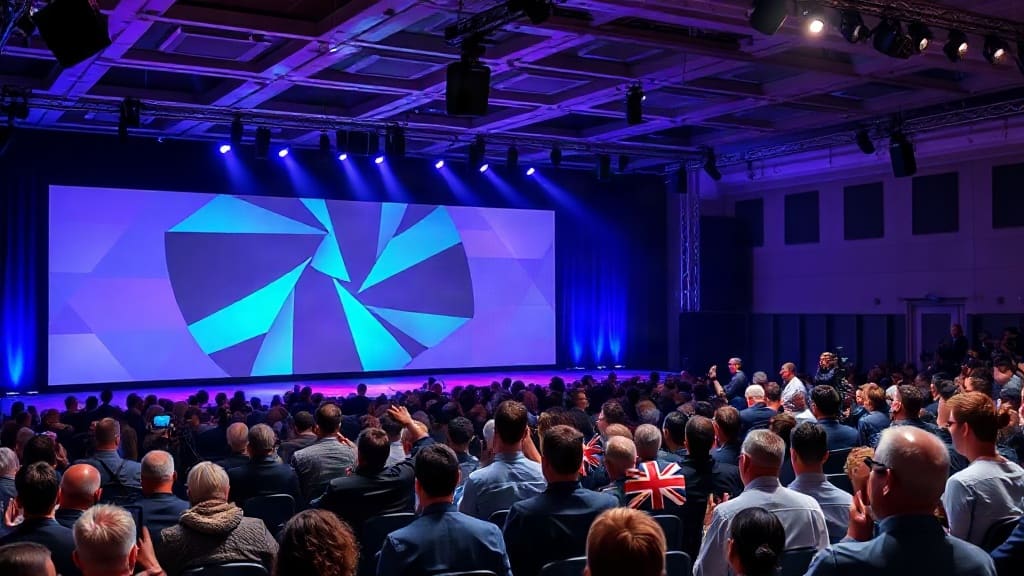
The political landscape in Britain has shifted in ways few could have predicted a decade ago. As Reform UK gathers for its annual conference, the mood is one of cautious optimism, but also of growing awareness that the spotlight now shines brighter than ever. The party's continued prominence has brought what prominence always brings: scrutiny. And that scrutiny is not always comfortable.
Chris Mason, the BBC's political editor, has been watching this evolution closely. In his analysis, the party faces significant headwinds as it seeks to transition from a disruptive force to a credible contender for power. The conference, typically a moment of unity and forward planning, is this year overshadowed by questions about the party's readiness for the responsibilities of governance.
The Rise of Reform UK: From Fringe to Mainstream
Reform UK's journey from a fringe protest movement to a significant player in British politics has been nothing short of remarkable. Originally founded as the Brexit Party, the organization rebranded and repositioned itself to capture the growing discontent with the two main parties. Under the leadership of figures like Nigel Farage and Richard Tice, the party tapped into a vein of frustration over immigration, the cost of living, and a perceived disconnect between Westminster and the rest of the country.
This strategy has paid dividends at the ballot box. In recent local elections, Reform UK has made inroads in areas traditionally held by the Conservatives, and opinion polls have at times placed the party ahead of the Tories. This success has transformed the political calculus for both Labour and the Conservatives, forcing them to respond to issues that Reform has placed on the agenda.
But with success comes a new set of challenges. The party's prominence has brought intense scrutiny of its policies, its internal structures, and its candidates. What was once a convenient protest vote is now being examined as a potential party of government. That is a very different proposition.
Policy Headwinds: From Slogans to Substance
One of the most significant challenges facing Reform UK is the need to move beyond catchy slogans and develop detailed, workable policies. The party's platform, which includes a hardline stance on immigration, a radical overhaul of the tax system, and a skeptical approach to climate change policies, is popular with its base but faces tough questions from economists and policy analysts.
For example, the party's proposal to freeze immigration and deport illegal entrants has been criticized for its practicality and potential economic impact. Similarly, its tax plans, which include raising the threshold for income tax and abolishing inheritance tax, raise questions about how the revenue shortfall would be addressed. These are the kinds of questions that are now being asked with greater frequency and intensity, and the party's answers have not always been convincing.
The conference will be an opportunity for Reform to flesh out its policy platform and demonstrate that it has the expertise to govern. However, the party's leadership has often preferred to focus on broad themes rather than detailed proposals. That approach may have worked when the party was on the fringes, but as it moves closer to the center of power, the expectations are higher.
Internal Pressures: The Challenge of Professionalization
Another headwind facing Reform UK is the challenge of professionalizing its operations. The party has grown rapidly, but its internal structures have not always kept pace. There have been reports of infighting, disputes over candidate selection, and a lack of clear lines of authority. These issues are not unique to Reform, but they are magnified by the party's rapid ascent and the intense media interest in its affairs.
Chris Mason has noted that the party's prominence brings what prominence always brings: scrutiny. That scrutiny extends to the party's internal workings, and any signs of disarray are quickly seized upon by opponents and the media. The conference, which is intended to be a showcase of unity and purpose, could instead expose divisions if they are not managed carefully.
The party's leadership is aware of these challenges and has taken steps to address them. There have been efforts to professionalize the party's campaign machinery, to improve candidate vetting, and to present a more disciplined public face. Whether these efforts will be enough to satisfy the party's critics remains to be seen.
The Media Spotlight: A Double-Edged Sword
The media's fascination with Reform UK is a double-edged sword. On the one hand, the constant coverage has helped to raise the party's profile and amplify its message. On the other hand, the coverage is not always favorable, and the party's leaders have often complained of unfair treatment by the mainstream media.
Chris Mason's analysis suggests that the party's relationship with the media is likely to become more fraught as it grows in prominence. The media's role is to ask tough questions and hold politicians to account, and Reform UK is no exception. The party's leaders may find that the scrutiny they once courted as outsiders becomes more uncomfortable as they become insiders.
The conference will be a key test of how the party handles this scrutiny. Will it embrace the opportunity to engage with journalists and explain its policies in detail, or will it retreat into a defensive posture? The answer will say a lot about the party's readiness for the challenges ahead.
The Road Ahead: Can Reform UK Sustain Its Momentum?
The fundamental question facing Reform UK is whether it can sustain its momentum and translate its current popularity into lasting political success. History is littered with parties that enjoyed a surge in support only to fade away when the next election came around. The challenge for Reform is to avoid that fate by building a durable political organization and a policy platform that can withstand scrutiny.
Chris Mason's assessment is that the party faces significant headwinds, but he does not dismiss its prospects entirely. The party has tapped into a genuine vein of discontent, and that discontent is unlikely to disappear anytime soon. However, the party's ability to capitalize on that discontent will depend on its ability to address the challenges of policy development, internal cohesion, and media scrutiny.
The conference is a moment of truth for Reform UK. It is an opportunity to demonstrate that the party is more than a protest movement, that it has the ideas and the people to govern. If it can do that, it may yet confound its critics and establish itself as a lasting force in British politics. If it fails, it may find that the headwinds are too strong to overcome.
Frequently Asked Questions
What are the main challenges facing Reform UK at its conference?
The main challenges include developing detailed policies beyond slogans, managing internal party cohesion and professionalization, and handling increased media scrutiny. The party must also convince voters that it is ready for government, not just protest.
How has Reform UK's prominence affected its political position?
Reform UK's prominence has brought greater public attention and electoral success, but it has also led to more intense scrutiny of its policies and internal workings. This scrutiny is a natural consequence of moving from the fringes to the mainstream, and it presents both opportunities and risks for the party.
What does Chris Mason say about Reform UK's prospects?
Chris Mason suggests that Reform UK faces significant headwinds as it gathers for its conference. He notes that the party's continued prominence has brought scrutiny, and he highlights the challenges of policy substance, internal cohesion, and media relations. While he does not dismiss the party's prospects, he emphasizes the need for Reform to address these challenges to sustain its momentum.
Why is the Reform UK conference important this year?
The conference is important because it is a key moment for the party to demonstrate its readiness for government. With increased poll numbers and public attention, the party is under pressure to show that it has the policies, personnel, and discipline to be a credible alternative. The conference will be closely watched by opponents, the media, and the public.