
When the Savannah Bananas first started tweaking baseball's rulebook, few outside the coastal Georgia city paid attention. A batter sprinting to first before the pitch arrives? A fan catching a foul ball for an out? It sounded like a gimmick. Fast forward a few years, and that gimmick has sold out minor league parks, filled football stadiums, and built a traveling circus that sells tickets faster than most major league teams. Now, the league behind it all is pushing two new boundaries at once: national borders and the physical limits of a single diamond.
The latest announcement from the Banana Ball world includes a plan to add international contests to the schedule and the unveiling of a new game concept called Banana Ball 360. According to the league, that format will feature two fields in one stadium. It is a bold, slightly absurd idea, which is exactly on brand for a sport that has made a habit of turning absurdity into sold-out shows.
From Savannah to the World Stage
Banana Ball began as an alternative to traditional baseball, designed to be faster, louder, and more fan-friendly. The rules are deliberately chaotic: no bunting, no stepping out of the batter's box, a two-hour time limit, and a scoring system that awards a point to the fans if a foul ball is caught in the stands. Players dance. Umpires crack jokes. The whole thing feels less like a sporting event and more like a variety show that happens to include athletic feats.
That formula has proven remarkably portable. The Savannah Bananas and their counterpart, the Party Animals, have toured across the United States, packing stadiums in cities that do not have a major league team and even some that do. The next logical step, according to the league, is to take the show abroad. International contests would mark the first time Banana Ball is played outside the U.S. on a regular basis, and they signal an ambition to turn a regional phenomenon into a global property.
Why now? The answer likely lies in the sport's growing digital footprint. Clips of trick plays and choreographed celebrations routinely rack up millions of views on social media, drawing eyeballs from countries where baseball is already popular, like Japan, South Korea, Mexico, and the Dominican Republic. Those markets have deep baseball traditions and fans who appreciate both skill and showmanship. A Banana Ball tour stop in Tokyo or Santo Domingo would not just be a novelty; it would be a cultural exchange with a built-in audience.
What Exactly Is '360'?
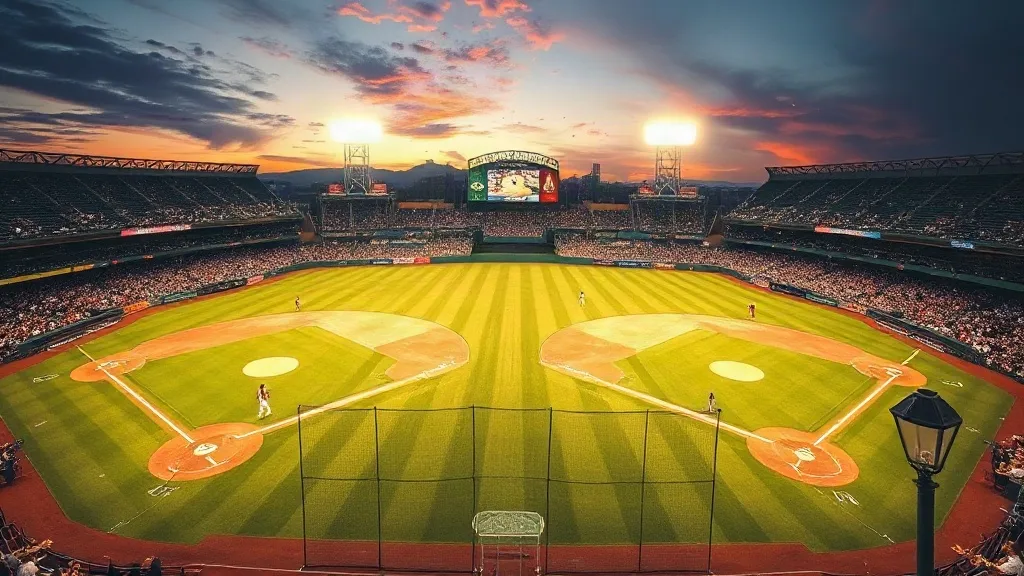
The second half of the announcement is where things get truly experimental. Banana Ball 360, as described by the league, will feature two fields in one stadium. Think about that for a moment. Instead of a single diamond with outfielders shagging flies, you would have two separate games happening simultaneously, presumably in the same venue, with fans able to watch both. The logistics are dizzying, but the concept is pure Banana Ball: take a familiar setup and scramble it until it becomes something new.
Details remain scarce. The league has not specified how the two fields would be arranged, whether they would overlap, or how players would move between them. But a few possibilities come to mind. One is a split-stadium configuration, with one field in the outfield grass and another in the infield, separated by temporary fencing. Another is a rotating schedule where teams switch fields between innings, creating a constant sense of motion. Yet another is a simultaneous doubleheader, with two games played at once and fans free to wander between viewing areas.
Whatever the final design, the two-field concept is a direct challenge to the traditional idea that a baseball game must happen on a single diamond. It also opens up new strategic layers. Managers would have to decide how to allocate pitchers, whether to shift defenders between fields, and how to handle the clock. For fans, it could mean twice the action in the same amount of time, which fits the league's promise of a fast-paced, entertainment-first experience.
Why This Matters Beyond the Gimmick
It is easy to dismiss Banana Ball as a sideshow. But the league's willingness to experiment offers a useful case study for anyone interested in how sports evolve. Traditional baseball has been criticized for decades about pace of play, length of games, and a perceived decline in youthful interest. Rule changes at the major league level, like the pitch clock and larger bases, have helped, but they are incremental. Banana Ball, by contrast, throws out the entire rulebook and starts from scratch. Its success suggests that there is an appetite for radical reinvention, not just tweaks.
The international expansion also raises interesting questions about adaptation. Baseball rules vary slightly from country to country, and fan expectations differ. In Japan, for example, games are known for organized cheering sections and a respectful atmosphere. In the Dominican Republic, the style is more improvisational and passionate. Banana Ball's choreographed chaos might translate differently in each market. The league will have to decide whether to tailor its act to local tastes or present a uniform product. Either way, the experiment will provide data on how far the concept can travel.
There is also a business dimension. International contests mean new revenue streams from ticketing, merchandise, and media rights. They also mean partnerships with local promoters and venues, which can be complicated. The league has not announced specific countries or dates, so it is too early to say how aggressive the rollout will be. But the mere mention of international contests signals that the owners see Banana Ball as more than a summer tour. They see it as a brand with global potential.
The Fan Experience: What to Expect
For fans, the most immediate impact will be on the in-stadium experience. Banana Ball games are already known for their interactivity: players sign autographs during innings, kids run the bases mid-game, and the mascot occasionally interferes with play. Adding a second field could amplify that interactivity. Imagine watching a home run derby on one diamond while a tightly contested game unfolds on the other. Or a skills competition running concurrently with a regular game. The possibilities are limited only by the league's imagination, which has never been in short supply.
There is also the question of ticketing. If two fields are in one stadium, does a single ticket grant access to both? Does the league sell separate passes? How does seating work? These are practical concerns that will determine whether 360 is a one-off stunt or a repeatable format. The league has a track record of figuring out logistics on the fly, often learning from mistakes in real time. That iterative approach has served it well so far.
For players, the new format could be a career opportunity. Banana Ball rosters are filled with former minor leaguers and college standouts who did not get a shot at the big leagues. A global tour and a new game format mean more games, more exposure, and potentially more leverage in negotiations with other leagues. It also means more wear and tear, so player health and safety will be a consideration. The league has not commented on roster sizes or travel schedules, but those details will matter.
The Road Ahead
Banana Ball has always thrived on surprise. The announcement of international contests and the 360 game fits that pattern. It is a double dose of ambition, one aimed at geography and the other at the very structure of the game. Whether both succeed remains to be seen. The international expansion will test the league's ability to adapt to new cultures and logistical hurdles. The 360 format will test whether fans will embrace a concept that sounds more like a video game than a sport.
What is clear is that the people behind Banana Ball are not content to rest on their current success. They are willing to take risks, even if some of those risks look foolish on paper. That willingness is precisely what has made them interesting. In a sports landscape where so much is optimized for safety and tradition, a league that puts two fields in one stadium and calls it entertainment is a refreshing anomaly.
For now, fans can only speculate about what Banana Ball 360 will look like. The league has promised more details in the coming months. If history is any guide, those details will be weird, wonderful, and almost certainly worth watching.
Frequently Asked Questions
What is Banana Ball 360 and how does it work?
Banana Ball 360 is a new game format announced by the Banana Ball league that will feature two fields in one stadium. The exact layout and rules have not been fully detailed, but the concept involves simultaneous or alternating play on two diamonds within the same venue, creating a faster, more action-packed experience for fans.
When will international Banana Ball games start?
The league has not announced specific dates or countries for international contests. The plan is in development, and more information is expected in the coming months. Given the league's typical timeline, the first international games could happen within the next year or two, but that is an estimate, not an official date.
Will Banana Ball 360 replace the regular Banana Ball format?
No. The 360 format is being introduced as an additional way to play, not a replacement. The traditional Banana Ball games will continue, and 360 will likely be used for special events or exhibitions. The league has a history of experimenting with new ideas without abandoning what already works.
How can fans get tickets for international or 360 games?
Ticket information has not been released. For now, fans should follow the league's official channels for announcements. When tickets do go on sale, they are likely to sell quickly, given the league's track record of sold-out shows. Signing up for newsletters or alerts is a good way to stay informed.
Does Banana Ball 360 change the rules of the game?
Yes, the format itself is a rule change, since it involves two fields. Other Banana Ball rules, like the two-hour time limit and no bunting, are expected to remain in place. The league may introduce new rules specific to 360, such as how players move between fields or how scoring works across two diamonds.