
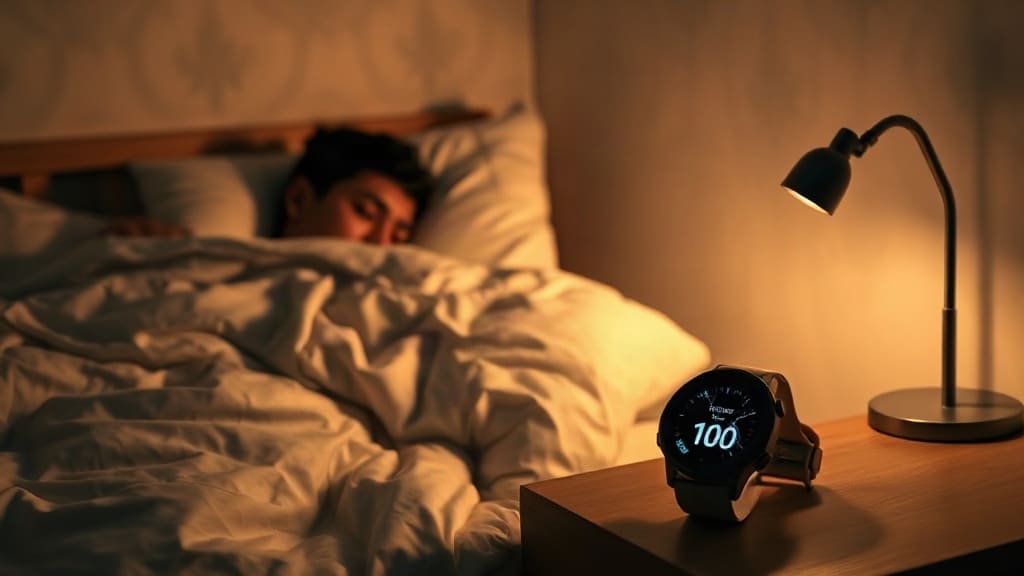
You glance at your wrist as soon as you wake up. A score of 78. Not bad, but not the 90 you were hoping for. A familiar wave of disappointment washes over you, and the day starts with a mental checklist: go to bed earlier, avoid that late snack, maybe try a new sleep supplement. Sound familiar? If you're constantly chasing a perfect sleep score, you might be surprised to learn that this very pursuit could be making your sleep worse. The rise of sleep tracking technology has given us unprecedented insight into our nightly rest, but for some, it has also created a new kind of anxiety: orthosomnia, the obsessive quest for perfect sleep.
The Allure of the Sleep Score
Sleep trackers, from wearable devices to under-mattress sensors, promise to quantify something deeply personal and mysterious. They break down your night into stages, assign numbers to your restlessness, and deliver a tidy verdict by morning. It's satisfying to see progress, to feel in control of your health. The data can reveal patterns, like how caffeine affects your deep sleep or how a consistent bedtime improves your score. But the line between useful feedback and harmful fixation is thin.
The problem arises when the score becomes the goal rather than a tool. Many people start to adjust their behavior solely to please the algorithm, not their body. They may force themselves to stay in bed longer than needed, avoid social events that run late, or lie awake worrying about their heart rate variability. This performance mindset around sleep can backfire spectacularly, because sleep is not a performance. It's a biological necessity that thrives on relaxation and surrender, not effort and control.
What Is Orthosomnia?
The term orthosomnia was coined by researchers to describe a new phenomenon: people who become so obsessed with achieving perfect sleep data that they actually develop insomnia. It's a paradoxical situation where the pursuit of better sleep creates worse sleep. The anxiety of not meeting a self-imposed standard triggers the body's stress response, making it harder to fall asleep and stay asleep. You lie in bed, mentally calculating how many hours you need to hit your target, and the pressure mounts.
One woman, a 38-year-old marketing executive, told me she used to check her sleep app at 3 a.m. when she woke up to use the bathroom. Seeing a low score mid-night would send her into a spiral of worry, ensuring she couldn't get back to sleep. She later realized the tracker was flagging normal awakenings that everyone experiences, but the feedback loop had trained her to fear them. Her story is not unique; sleep clinics are seeing more patients whose primary complaint is anxiety about their sleep data, not the sleep itself.
The Flaws in Sleep Tracking
It's important to understand that consumer sleep trackers are not medical devices. They use movement, heart rate, and sometimes temperature to estimate sleep stages, but these are indirect measures. A study published in a leading sleep journal found that many popular devices overestimate sleep time and underestimate wakefulness compared to polysomnography, the gold standard in sleep labs. This means your score of 85 might actually reflect a much more fragmented night, or a score of 60 might be overly harsh.
Moreover, the algorithms are proprietary and often not validated on diverse populations. Factors like skin tone, body position, and even mattress type can skew results. Relying too heavily on these numbers can lead you to chase fixes for problems that don't exist. For example, if your tracker says you got only 20 minutes of deep sleep, you might start taking melatonin or buying a new pillow, when in reality, your deep sleep was perfectly normal for your age and the tracker simply missed it. Treating the data as absolute truth is a recipe for frustration and misguided interventions.
The Vicious Cycle of Sleep Anxiety
When you become fixated on a perfect score, you inadvertently create a state of hyperarousal around bedtime. Your brain interprets the need to sleep well as a threat, because failure has consequences: a bad score, a ruined day, a sense of inadequacy. This activates the sympathetic nervous system, the fight-or-flight response, which is the enemy of sleep. The more you try to control your sleep, the more elusive it becomes.
This is a classic example of the ironic process theory: the harder you try to force something that should be automatic, the more you disrupt it. Sleep is like a cat; it comes when you're not chasing it. By constantly monitoring and evaluating your sleep, you keep your mind engaged when it should be disengaging. The result is longer sleep latency (the time it takes to fall asleep), more nighttime awakenings, and a subjective feeling of poor rest, even if the objective metrics are acceptable.
When Tracking Becomes Harmful
Not everyone who uses a sleep tracker develops orthosomnia. For many, it's a helpful tool that encourages healthy habits. The key is to recognize when tracking crosses from helpful to harmful. Here are some warning signs:
- Checking the app multiple times a day, especially if you feel anxious about the numbers.
- Making major lifestyle changes based solely on a single night's score, like canceling plans or staying home to protect your sleep window.
- Feeling guilt or shame when your score is below your target.
- Lying in bed awake, worrying about how the night's data will look.
- Ignoring your body's signals to fit a rigid schedule dictated by the tracker.
If you recognize yourself in these behaviors, it might be time to reassess your relationship with sleep technology. The goal should be to use data as a gentle guide, not a tyrant. Remember, the tracker is a tool for you; you are not a tool for the tracker.
How to Build a Healthier Relationship with Sleep Tracking
Breaking free from sleep score obsession doesn't mean throwing away your device. It means shifting your mindset and using the data differently. Here are some practical strategies:
- Set a weekly, not daily, focus. Instead of obsessing over each night, look at trends over a week or month. A single bad night is meaningless; a pattern of poor sleep is worth investigating.
- Prioritize how you feel over the score. Ask yourself: Do I feel rested? Do I have energy during the day? Am I able to concentrate? These subjective measures are often more meaningful than a number.
- Use the tracker to identify big-picture patterns, not micro-manage. For example, notice that late alcohol consumption consistently lowers your sleep quality, then address that. Don't tweak your bedtime by 10 minutes based on a single data point.
- Create a wind-down routine that doesn't involve screens. The blue light from your phone or tablet can suppress melatonin, and checking your sleep app right before bed activates your mind. Charge your device outside the bedroom if possible.
- Practice letting go. Remind yourself that sleep is a natural process that your body knows how to do. You don't need to earn a good night's sleep; you deserve it simply by being human.
- Consider a tracker holiday. Try going without your device for a week or two. Notice if your sleep improves, if your anxiety drops, or if you miss the data at all. This can be a powerful reset.
The Role of Sleep in Overall Health
It's worth remembering why we care about sleep in the first place. Good sleep is foundational to physical health, mental clarity, emotional resilience, and immune function. Chronic sleep deprivation is linked to a host of problems, from heart disease to depression. But the solution is not to become a sleep perfectionist. In fact, research shows that people who are too rigid about their sleep schedules may be at higher risk for insomnia. Flexibility and self-compassion are key.
A healthy approach to sleep is like a healthy approach to eating: you aim for balance, not perfection. Some nights you'll sleep deeply, others you'll toss and turn. That's normal. The occasional bad night is not a failure; it's part of being human. Your worth is not measured by your sleep score.
When to Seek Professional Help
If your sleep concerns are persistent and interfere with your daily life, it may be time to see a healthcare provider. A sleep specialist can conduct a proper evaluation, rule out underlying conditions like sleep apnea or restless legs syndrome, and offer evidence-based treatments such as cognitive behavioral therapy for insomnia (CBT-I). CBT-I is the first-line treatment for chronic insomnia and focuses on changing the thoughts and behaviors that perpetuate sleep problems, including the anxiety around sleep itself. It's far more effective than any gadget or supplement.
Remember, the goal of sleep tracking should be to enhance your well-being, not to become another source of stress. If your device is causing more anxiety than insight, it's okay to put it in a drawer. Your body knows how to sleep; sometimes, you just need to get out of its way.
Frequently Asked Questions
What is a good sleep score?
A good sleep score is highly individual and depends on your age, lifestyle, and health status. Most trackers use a scale of 0 to 100, with scores above 80 generally considered good. However, the absolute number matters less than your own trends and how you feel. A score of 70 might be excellent for a new parent or someone with a chronic illness, while a consistent 90 might still leave you tired if the tracker is inaccurate. Focus on consistency and recovery, not a perfect number.
Can sleep trackers cause insomnia?
Yes, in some cases. The anxiety of monitoring sleep data can lead to a condition called orthosomnia, where the pursuit of perfect sleep metrics actually causes or worsens insomnia. The stress of trying to achieve a high score can activate the body's fight-or-flight response, making it harder to fall asleep and stay asleep. If you notice that checking your sleep tracker makes you more anxious or interferes with your ability to relax at bedtime, it may be time to reduce or stop using it.
How accurate are consumer sleep trackers?
Consumer sleep trackers are not as accurate as medical-grade sleep studies. They estimate sleep stages using indirect measures like movement and heart rate, which can be affected by many factors. Studies have shown that these devices often overestimate total sleep time and underestimate wakefulness. They can be useful for identifying broad patterns, but they should not be used to diagnose sleep disorders or make precise adjustments to your sleep schedule.
What is sleep perfectionism and how can I avoid it?
Sleep perfectionism is the tendency to hold yourself to unrealistically high standards for sleep and to feel distressed when you don't meet them. To avoid it, try to adopt a more flexible mindset. Recognize that occasional poor sleep is normal and not a sign of failure. Focus on how you feel during the day rather than a number on an app. If you use a tracker, look at weekly trends instead of nightly scores, and be willing to take breaks from tracking to reconnect with your body's natural signals.
When should I stop using a sleep tracker?
Consider stopping or pausing your sleep tracker if you notice that it's causing more stress than benefit. Signs include checking the app multiple times a day, feeling anxious about your score, making rigid rules around sleep based on tracker data, or lying awake worrying about your sleep metrics. A good test is to take a week off and see how you feel. If your sleep improves or your anxiety drops, you may not need the tracker at all. If you continue to have sleep problems, consult a healthcare professional.