
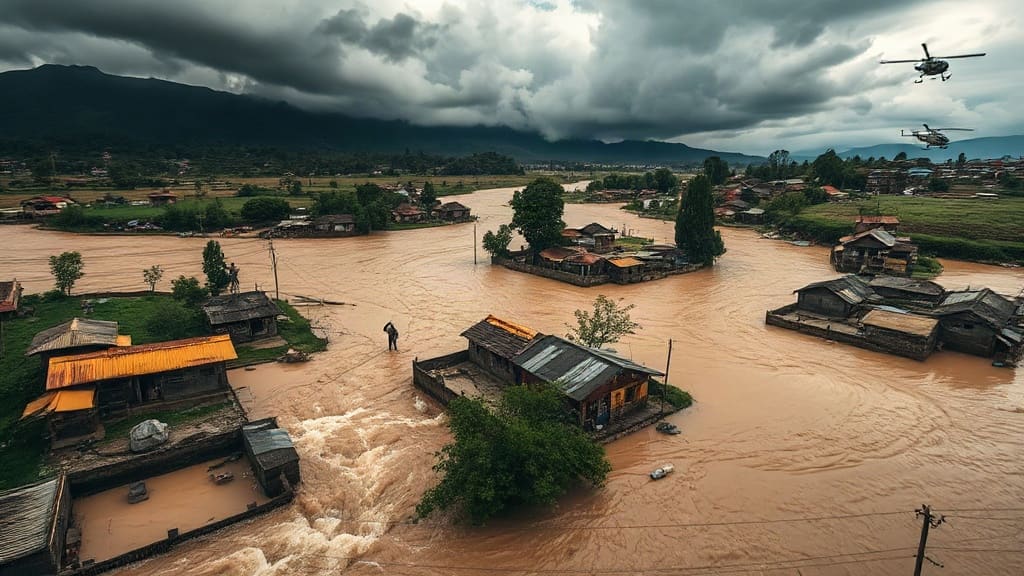
As monsoon rains continue to batter Nepal's mountainous terrain, the country is facing one of its deadliest natural disasters in recent memory. More than 1,000 people have lost their lives, and thousands more remain unaccounted for, according to the United Nations. The sheer scale of the devastation has pushed the government and international aid agencies into overdrive, with helicopters airlifting emergency supplies to villages cut off by landslides and surging rivers. Yet even as the immediate search-and-rescue phase continues, a larger question looms: how can a nation so vulnerable to climate extremes rebuild in a way that prevents future tragedies of this magnitude?
The floods, triggered by an unusually intense monsoon, have swept away homes, bridges, and roads across vast swaths of the country. The hardest-hit areas are in the western and central regions, where steep valleys channel rainwater into raging torrents. Entire hillsides have collapsed, burying settlements under mud and debris. In the district of Sindhupalchowk alone, dozens of people are feared trapped beneath the rubble. Nepal's disaster response teams, supported by the army and police, have been working around the clock, but their efforts are hampered by damaged infrastructure and the constant threat of further landslides.
For many survivors, the nightmare is far from over. Thousands have been displaced, forced to seek shelter in makeshift camps where clean water and sanitation are scarce. The risk of waterborne diseases such as cholera and typhoid is rising by the day. Medical teams are racing to deliver vaccines and basic healthcare, but reaching isolated communities remains a formidable challenge. The UN and its partners have mobilized emergency funding, but the needs on the ground are staggering. Every hour counts, yet the window for saving lives is narrowing as the monsoon season shows no sign of letting up.
Why this disaster is different
Nepal is no stranger to monsoon floods. Every year, the rains bring a certain level of destruction, and communities have learned to adapt. But the current crisis stands apart in both its scale and its ferocity. Climate scientists have long warned that rising global temperatures would intensify the South Asian monsoon, leading to more extreme rainfall events. This year, those warnings have become a grim reality. The ground, already saturated from weeks of rain, simply cannot absorb any more water. Rivers have burst their banks, and the resulting flash floods have caught many people off guard, despite early warning systems that were put in place after previous disasters.
Another factor is the rapid pace of unplanned urbanization in Nepal's valleys and floodplains. As people migrate from rural areas in search of work, they often settle in high-risk zones that are prone to flooding. Building codes are poorly enforced, and many homes are constructed with materials that cannot withstand the force of moving water. Disaster preparedness remains critically underfunded, leaving communities with few resources to protect themselves. The combination of a changing climate and vulnerable infrastructure has created a perfect storm, one that has overwhelmed the country's capacity to respond.
The international response and local resilience
In the face of such overwhelming odds, the resilience of the Nepali people is on full display. Local volunteers have been at the forefront of rescue efforts, using makeshift rafts and their bare hands to pull survivors from the mud. Social media has become a vital tool for coordinating aid, with citizens sharing information about missing loved ones and organizing donation drives. This grassroots response has been crucial in the early days of the crisis, when official help was slow to arrive in remote areas.
At the same time, the international community has stepped up. The United Nations has released emergency funds and deployed assessment teams to coordinate relief operations. Countries including India, China, and the United States have offered assistance, from helicopters to medical supplies. However, logistical challenges remain enormous. Many of the affected villages are reachable only by foot or by air, and the weather often grounds helicopters for hours at a time. Humanitarian agencies are calling for sustained support, warning that the recovery effort will take months, if not years.
What happens next: rebuilding smarter
As the waters begin to recede, attention will inevitably turn to reconstruction. But the question is whether Nepal will rebuild in a way that reduces future risk, or simply replicate the vulnerabilities of the past. Experts argue that this is a pivotal moment for the country to invest in climate-resilient infrastructure, such as reinforced embankments, improved drainage systems, and early warning networks that reach every village. Equally important is the need for land-use planning that keeps people out of harm's way.
There are already some signs of progress. Nepal's National Disaster Risk Reduction and Management Authority has been working with local governments to map hazard zones and develop community-based preparedness plans. But these efforts are often underfunded and lack the political will to enforce regulations. The current tragedy could serve as a wake-up call, galvanizing both domestic and international investment in long-term resilience. Whether that happens will depend on sustained pressure from civil society and the media, as well as a genuine commitment from political leaders.
Frequently Asked Questions
How many people have died in the Nepal floods?
According to the United Nations, more than 1,000 people have been confirmed dead as a result of the floods and landslides. Thousands more are still missing, and the death toll is expected to rise as rescue teams reach more remote areas.
What is causing the severe flooding in Nepal?
The flooding is primarily due to an unusually intense monsoon season, which has brought record rainfall to many parts of the country. Climate change is believed to be a contributing factor, as warmer air holds more moisture and leads to heavier downpours. Deforestation and unplanned construction in flood-prone areas have also increased the risk.
How is the international community helping Nepal?
The United Nations has released emergency funds and is coordinating relief efforts with the Nepali government. Several countries have offered aid, including helicopters, medical teams, and supplies. However, access to remote villages remains a major challenge, and agencies are appealing for additional support.
What are the main risks for survivors in the aftermath?
Survivors face multiple risks, including waterborne diseases, food shortages, and lack of shelter. The destruction of infrastructure also makes it difficult to deliver aid. Mental health is another concern, as many people have lost family members and their homes.
How can I help the flood victims in Nepal?
The best way to help is to donate to reputable organizations that are working on the ground, such as the Red Cross, UNICEF, or local Nepali NGOs. Avoid sending unsolicited goods, as they can clog supply chains. Financial contributions allow aid agencies to purchase exactly what is needed and support the local economy.