
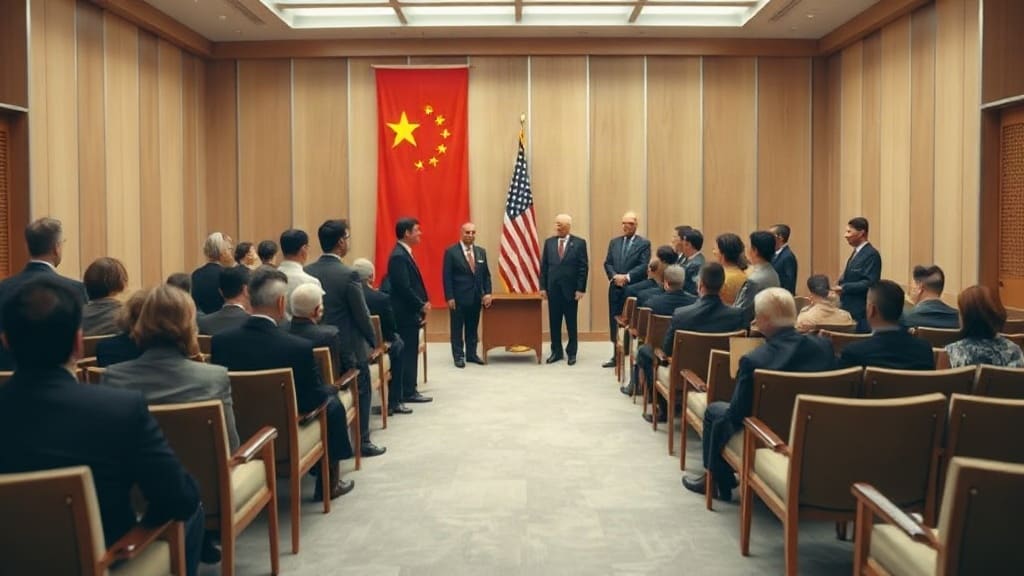
When Xi Jinping arrived in the United States for a high-profile summit, the guest list on the Chinese side raised eyebrows: no prominent CEOs from China's tech or manufacturing giants. In contrast, American business leaders turned out in force, eager to engage with the Chinese president. This stark asymmetry is more than a logistical quirk; it reflects a profound transformation in the relationship between the world's two largest economies. The days when Chinese corporate titans traveled alongside their political leaders to charm foreign investors are fading, and their absence tells a story of growing caution, regulatory tightening, and a reordering of priorities in Beijing.
The Changing Face of China's Business Diplomacy
Not long ago, a Chinese presidential trip abroad would have been unthinkable without a coterie of billionaire entrepreneurs. Jack Ma of Alibaba, Pony Ma of Tencent, and other luminaries would often be seen at sideline events, shaking hands with Western counterparts and signing deals. Their presence symbolized China's embrace of global markets and its desire to integrate with the world economy. But that era has passed. Under Xi Jinping, the Chinese government has reasserted control over the private sector, and the once-celebrated tech moguls have largely retreated from the international stage. The absence of CEOs on this trip underscores a deliberate shift: Beijing now prioritizes state-led initiatives and political messaging over corporate networking.
This change didn't happen overnight. It stems from a series of regulatory crackdowns that began in 2020, targeting everything from antitrust violations to data security. Companies like Alibaba and Didi faced hefty fines and restructuring demands. The message was clear: private businesses must align with national goals, not pursue their own global ambitions unchecked. As a result, many Chinese executives have kept a low profile, avoiding the spotlight that once made them global celebrities. Their absence at a major diplomatic event is a logical extension of this new reality.
Why American CEOs Still Show Up
On the American side, the enthusiasm was palpable. Top executives from Apple, Tesla, and BlackRock, among others, seized the opportunity to meet with Xi. For them, China remains a critical market and a key part of their supply chains. Despite rising tensions, they are eager to maintain access and advocate for their interests. Their presence highlights a persistent belief that engagement is better than isolation. Yet, this eagerness also reveals a certain anxiety: as US-China relations grow more fraught, American businesses fear being caught in the crossfire. They hope that direct dialogue with Chinese leadership can smooth the path for continued operations.
But the asymmetry is striking. While American CEOs clamor for attention, their Chinese counterparts are nowhere to be seen. This imbalance reflects the different political economies of the two countries. In the US, private enterprise still holds significant sway over foreign policy, and CEOs are accustomed to playing a diplomatic role. In China, the party-state calls the shots, and business leaders are expected to follow, not lead. The absence of Chinese CEOs thus sends a message about who truly represents China on the world stage: the Communist Party, not the corporate sector.
Implications for China-US Relations
The lack of Chinese business representation could have several consequences. First, it may reduce opportunities for Track II diplomacy, where informal business ties help bridge political divides. Without CEOs to facilitate back-channel communications, misunderstandings may fester. Second, it signals to American companies that China's business environment is becoming less predictable and more politicized. This could deter further investment at a time when China is trying to attract foreign capital to boost its slowing economy. Finally, it reinforces the narrative that China is turning inward, prioritizing self-reliance over global integration.
Some analysts argue that the absence of CEOs is a deliberate tactic to avoid any appearance of seeking favors from the US. By keeping business figures away, Xi can project an image of strength and independence, focusing on political and strategic issues rather than commercial deals. This aligns with his broader vision of China as a global power that sets its own rules. However, it also risks alienating the very business community that has long been a stabilizing force in the relationship.
The View from Beijing
From Beijing's perspective, the days of using CEOs as informal ambassadors may be over. The government wants to control the narrative and prevent any individual from overshadowing the state's agenda. Moreover, many Chinese tech companies are now focused on domestic challenges, such as complying with regulations and navigating a tougher economic climate. International expansion is no longer the top priority. This inward turn is partly a response to US sanctions and export controls, which have made it harder for Chinese firms to operate globally. By not bringing CEOs, Xi avoids highlighting these vulnerabilities.
Yet, this strategy has its downsides. Without business leaders, China misses a chance to showcase its commercial openness and attract foreign investment. The American CEOs who did attend may leave with the impression that China is less welcoming than before. In the long run, this could accelerate the decoupling of the two economies, a process that is already underway in areas like technology and finance.
What It Means for Global Business
For multinational corporations, the message is clear: China's business landscape is becoming more complex and politically charged. Companies need to navigate a maze of regulations and political sensitivities. The absence of Chinese CEOs at high-level talks suggests that business interests are subordinate to state interests. This may lead some firms to diversify their operations away from China, seeking stability elsewhere. Others may double down on engagement, hoping to secure their position in the Chinese market.
Ultimately, the CEO-free entourage is a symbol of a broader trend: the politicization of economic ties between the US and China. As geopolitical competition intensifies, business relationships are increasingly shaped by national security concerns and ideological differences. The era of cozy corporate diplomacy is giving way to a more guarded and strategic approach. For now, the empty seats where Chinese CEOs might have sat serve as a reminder that the rules of engagement have changed.
Frequently Asked Questions
Why didn't Xi Jinping bring Chinese CEOs to the US?
Xi Jinping's decision to exclude Chinese CEOs likely reflects a deliberate strategy to keep the focus on political and strategic issues rather than commercial deals. It also aligns with Beijing's broader efforts to assert control over the private sector and avoid any appearance of seeking favors from the US.
What does the absence of Chinese CEOs mean for US-China business relations?
It signals a shift towards a more state-centric approach in China, where business interests are subordinate to political goals. This could reduce informal business diplomacy and make the business environment less predictable for American companies, potentially leading to further decoupling.
How did American CEOs react to Xi's visit?
American CEOs showed strong interest, with many top executives attending meetings with Xi. They remain eager to engage with China due to its importance as a market and manufacturing hub, despite rising tensions. Their presence contrasts with the absence of their Chinese counterparts.
Will this trend continue in future diplomatic engagements?
It is likely that Chinese presidents will continue to travel without large CEO delegations, as the government prioritizes political messaging over corporate networking. However, the composition of future delegations may vary depending on the specific goals of each trip.