
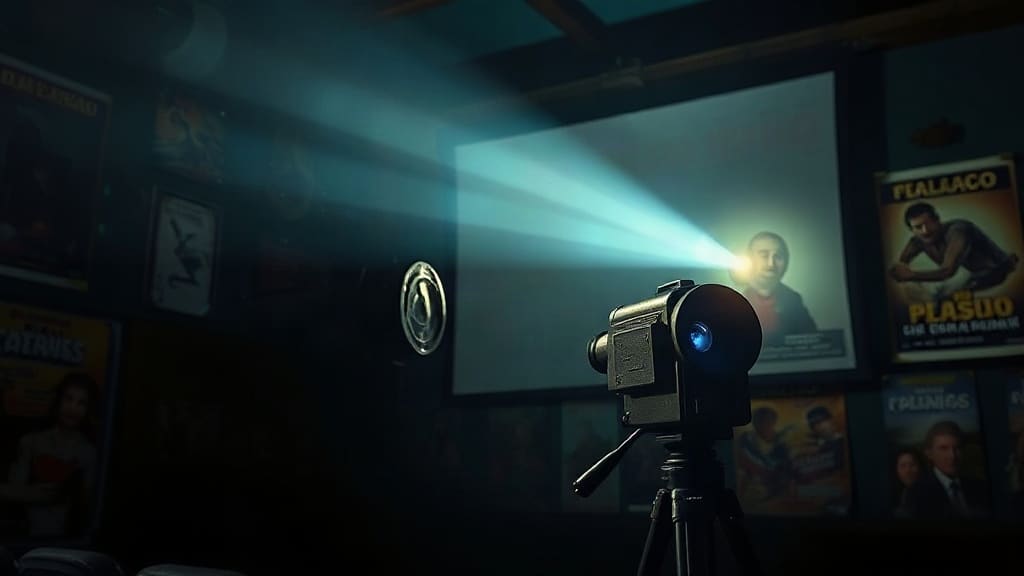
Some films feel less like stories and more like transmissions from another dimension. Iván Zulueta's Rapture (original title: Arrebato) is one such artifact. Originally released in 1979, this Spanish supernatural mystery has long been a holy grail for cult cinema devotees, and its return to theaters offers a rare chance to experience its unsettling magic on the big screen. The film is a deeply strange cheese dream of cinemania, a phrase that captures its intoxicating blend of obsession, horror, and love for the movies themselves.
At its core, Rapture is a film about addiction, but not to drugs or alcohol. Its characters are addicted to images, to the act of recording and being recorded. The plot follows José, a horror filmmaker going through a creative and personal crisis. He meets Pedro, a mysterious young man who introduces him to a bizarre experiment: filming himself while he sleeps, capturing something otherworldly that emerges only in those unconscious hours. What begins as an artistic curiosity spirals into a dangerous, reality-bending pursuit.
What makes Rapture so enduring is not its plot, which often meanders into dream logic, but its atmosphere. The opening ten minutes unfold in a jittery quiet, almost silent, drawing you into a world where every creak and shadow feels charged with meaning. There are longueurs, yes, and some of the performances border on silent-movie exaggeration, but these quirks only add to the film's peculiar charm. It is a deeply unnerving, enveloping experience, one that lingers long after the credits roll.
The Almodóvar Connection
For many viewers, the most intriguing aspect of Rapture is its connection to Pedro Almodóvar. Before he became Spain's most celebrated living director, a young Almodóvar contributed voice-over dubbing for one of the female characters in the film. This marginal involvement was the beginning of a lifelong connection between Almodóvar and Zulueta. More importantly, the film's DNA is woven into Almodóvar's entire body of work.
Consider the parallels. Rapture celebrates what one character calls "cinemania" – an all-consuming passion for cinema that mirrors Almodóvar's own. It employs a double-stranded narrative, jumping between past and present, a technique Almodóvar would later perfect in films like Pain and Glory. The queer euphoria that pulses through Rapture also became a hallmark of Almodóvar's cinema, from Law of Desire to Bad Education. And the importance of extended flashbacks, used here to haunting effect, would become a signature of Almodóvar's storytelling.
Watching Rapture today is like finding a Rosetta Stone for Spanish cinema. It helps explain where Almodóvar's sensibilities came from, and why his early films felt so fresh and transgressive. Zulueta was a pioneer, and his influence on Almodóvar is both direct and profound.
A Cheese Dream of Cinemania
The phrase "cheese dream" might sound dismissive, but it is meant as high praise. Rapture has the logic of a fever dream, where images melt into one another and time becomes elastic. It is a film that trusts its audience to surrender to its rhythms, to let go of conventional narrative expectations. In doing so, it creates a unique kind of horror – not one built on jump scares or gore, but on a creeping sense that reality is not what it seems.
Zulueta was a multidisciplinary artist, known for his experimental short films and his work in photography and design. Rapture was his only feature, and it bears the mark of an artist who saw cinema as a canvas for personal expression. The film's visual style is striking, with a grainy, almost documentary-like texture that makes the supernatural elements feel disturbingly real. The sound design, too, is remarkable, using silence and ambient noise to build tension.
It is no wonder that Rapture has developed a cult following over the decades. It is a film that rewards repeated viewings, each time revealing new layers and connections. For fans of Almodóvar, it is essential viewing. For horror enthusiasts, it offers a different kind of scare – one that gets under your skin. And for anyone interested in the possibilities of cinema, it is a reminder that films can be strange, personal, and uncompromising.
Why Rapture Still Matters
In an era of franchise films and algorithm-driven content, Rapture stands as a testament to the power of singular vision. It was made on a modest budget, with a small crew, but its impact has been outsized. It influenced not just Almodóvar but a whole generation of Spanish filmmakers who saw in it a way to tell stories that were both deeply personal and wildly imaginative.
The film also resonates with contemporary conversations about media consumption and obsession. The characters' compulsion to record themselves, to capture their own lives on film, feels eerily prescient in the age of social media and reality TV. Rapture asks: what happens when we become addicted to our own image? What do we lose when we try to capture everything? These questions are more relevant than ever.
Moreover, the film's exploration of queer desire and identity is groundbreaking for its time. It does not treat queerness as a problem to be solved or a tragedy to be endured. Instead, it presents it as a source of energy and creativity, a form of euphoria. This affirmative approach was radical in 1979 and remains refreshing today.
The Restoration and Revival
The current revival of Rapture is part of a broader effort to restore and re-release Spanish cult classics. The film has been restored in 4K, allowing audiences to appreciate its visual beauty in a way that was not possible before. The restoration also includes a new subtitle translation, which helps clarify some of the film's more cryptic dialogue.
For those who have only seen Rapture on blurry VHS or poor-quality bootlegs, this is a revelation. The film's textures, its use of light and shadow, its intricate soundscape – all of these come alive in the restoration. It is a reminder that Rapture is not just a cult curiosity but a major work of art.
The revival also offers a chance to reassess Zulueta's legacy. He died in 2009, relatively unknown outside of Spain, but his influence continues to be felt. A new generation of filmmakers, from Pedro Almodóvar to Guillermo del Toro, has cited him as an inspiration. Rapture is the key to understanding his vision.
Final Thoughts
Rapture is not an easy film. It demands patience and a willingness to embrace ambiguity. But for those who surrender to it, it offers a deeply rewarding experience. It is a horror film that operates on a psychological level, a love letter to cinema, and a window into the mind of a true original. If you have the chance to see it on the big screen, do not miss it. And if you are a fan of Almodóvar, consider it required viewing – you will never see his films the same way again.
Frequently Asked Questions
What is Rapture (Arrebato) about?
Rapture follows a horror filmmaker who becomes obsessed with a mysterious young man and his experiment of filming himself while sleeping, leading to a supernatural and psychological unraveling.
Why is Rapture considered a cult film?
Its unique blend of horror, experimental style, and themes of obsession and cinemania, along with its influence on Pedro Almodóvar, have earned it a devoted following over the decades.
How did Pedro Almodóvar contribute to Rapture?
A young Almodóvar did voice-over dubbing for one of the female characters, marking the beginning of his connection with director Iván Zulueta.
Is Rapture streaming online?
Availability varies by region. The recent 4K restoration has led to theatrical screenings and potential streaming releases, so check local listings and platforms.
What makes Rapture's atmosphere so effective?
Its use of silence, jittery camerawork, and a pervasive sense of dread create an enveloping, unnerving experience that stays with viewers long after the film ends.