
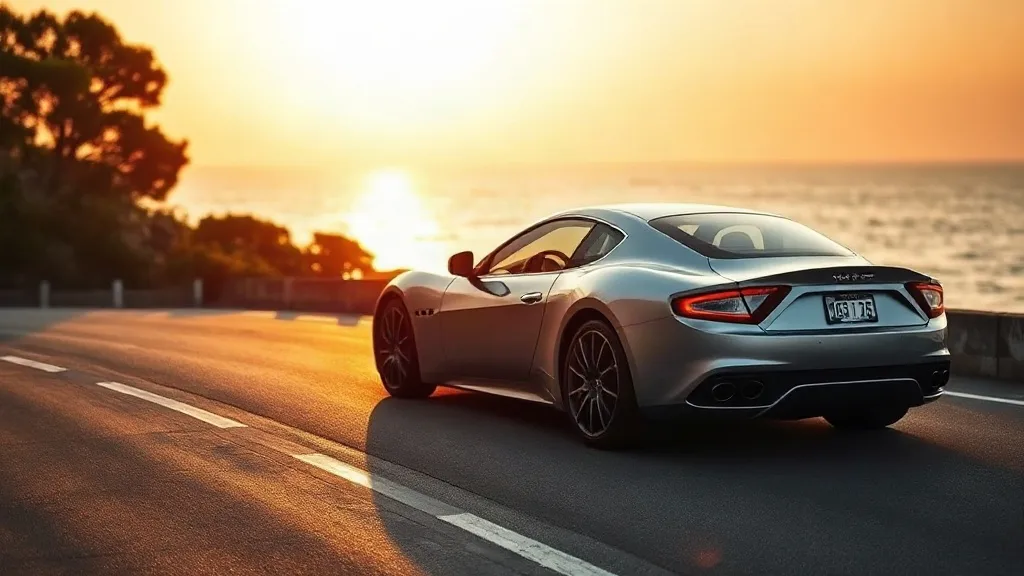
In an era when car design often seems locked in a competition for the most extreme grille or the most dramatic light signature, Maserati is taking a step back. The Italian luxury brand recently stated that its cars don't need wild styling to stand out, emphasizing instead the importance of proportions and craftsmanship. It's a bold claim in a segment where visual drama is often the default currency. But is Maserati right? And what does this approach mean for the future of automotive design?
The Design Philosophy: Less Drama, More Substance
Maserati's argument is rooted in a simple idea: a car's presence comes from its underlying architecture, not from decorative flourishes. Proportion — the relationship between length, width, height, and wheelbase — is what gives a vehicle its stance and visual weight. Get that right, and you don't need aggressive scoops or oversized wings to turn heads.
This philosophy isn't new for Maserati. The brand's classics, like the 3500 GT and the Ghibli of the 1960s, were celebrated for their elegant lines and balanced proportions. They weren't ostentatious; they were sophisticated. That heritage seems to be informing the current strategy, even as the brand introduces new models like the MC20 supercar and the Grecale SUV.
Why Proportions Matter More Than Ever
In the age of electric vehicles, proportions are becoming both more challenging and more important. Batteries often force designers to raise ride heights and alter traditional silhouettes. Yet Maserati's emphasis on proportion suggests the brand is committed to maintaining classic automotive beauty even as powertrains change.
Moreover, craftsmanship — the quality of materials, the precision of assembly, the attention to detail — is something that can't be faked with a wild design. It's felt every time you open a door, touch a surface, or hear the engine. For Maserati, this tactile experience is a key differentiator that wild styling alone can't provide.
The Risk: Blending In?
Of course, there's a risk. In a market where boldness often equates to attention, a conservative design could be seen as forgettable. But Maserati isn't advocating for blandness; it's advocating for a different kind of boldness — one that rewards a second look. The craftsmanship becomes the standout feature, not the shape of the headlights.
This approach also aligns with a broader shift in luxury consumption. Today's affluent buyers often prefer understated elegance over flashy displays of wealth. They value authenticity and quality over mere spectacle. Maserati's stance could resonate with this mindset, positioning its cars as connoisseur's choices rather than showpieces.
What This Means for the Brand and the Market
Maserati's design philosophy could have several implications:
- Differentiation through detail: By focusing on craftsmanship, Maserati can distinguish itself from rivals that rely on aggressive styling. This could attract buyers who appreciate subtlety.
- Longer design cycles: Cars with balanced proportions tend to age more gracefully, reducing the need for frequent redesigns and preserving resale value.
- Influence on other brands: If Maserati succeeds, it might encourage other luxury automakers to reconsider their reliance on extreme styling cues.
However, the brand must ensure that its cars still have enough visual impact to attract new customers, especially in markets like the US and China where bold design is often prized.
A Balanced Approach
Maserati's statement doesn't mean its cars are boring. The MC20, for instance, is a striking supercar with proportions that scream performance. The Grecale has a confident stance and distinctive details. The key is that these elements are integrated harmoniously rather than added for shock value.
In many ways, Maserati is betting that the pendulum is swinging back from excess to elegance. As the automotive world navigates electrification and changing consumer tastes, the brand's emphasis on proportion and craftsmanship might prove to be a savvy move.
Frequently Asked Questions
What does Maserati mean by "proportions" in car design?
Proportions refer to the relative dimensions of a car's body, such as the ratio of length to height, the wheelbase, and the placement of the cabin. Good proportions create a balanced, athletic stance that looks right from any angle.
Why is craftsmanship important in luxury cars?
Craftsmanship denotes the quality of materials and the skill involved in assembling the vehicle. It's a tangible sign of luxury that owners experience daily through touch, sound, and visual details.
Will Maserati's cars become less distinctive?
Maserati insists that its cars will remain distinctive through their proportions and craftsmanship rather than through extreme styling. The brand aims for timeless elegance over fleeting trends.
How does this philosophy affect electric vehicles?
Electric vehicles present new proportion challenges due to battery placement. Maserati's focus on proportion suggests it will strive to maintain classic automotive aesthetics even as it electrifies its lineup.
Is this a new direction for Maserati?
Not entirely. Maserati has a history of elegant, proportion-focused design. This statement reinforces a return to its roots, emphasizing substance over spectacle.