
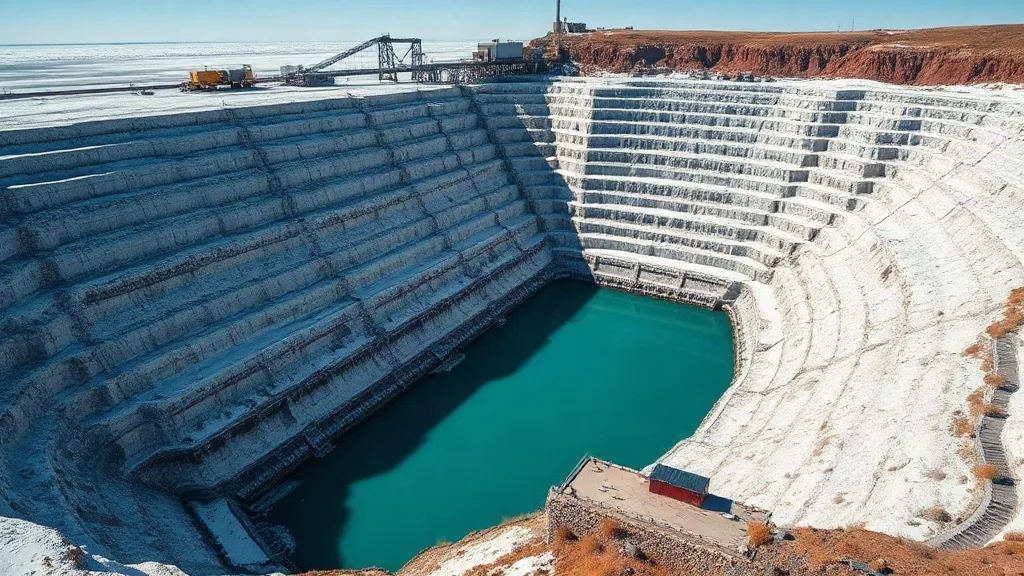
When a company can raise prices by double digits without losing customers, it's worth paying attention. That's exactly what Compass Minerals did recently, announcing a roughly 12% increase in North American highway salt prices for fiscal 2027. For long-term investors, this move offers a window into the company's pricing power, its competitive position, and the risks that could derail the story.
Compass Minerals is a leading producer of essential minerals, including salt for highway deicing and specialty plant nutrition products. The highway salt business is particularly interesting because it's a low-margin, high-volume operation that depends on winter weather. But it's also a business with high barriers to entry: salt deposits are geologically scarce, and transportation costs make it impractical to ship salt long distances. That gives established producers like Compass a durable advantage.
Why the Price Hike Matters
The 12% price increase for fiscal 2027 is significant because it comes after several years of relatively flat pricing. Highway salt contracts are typically negotiated annually, and price increases are often modest. A double-digit hike suggests that Compass is confident in its bargaining position, likely due to tight supply conditions and strong demand from state and local governments.
For investors, this is a clear signal that pricing power is intact. In a commodity business, pricing power is rare and valuable. It means the company can pass on cost inflation and even expand margins. If Compass can sustain this level of pricing, it could lead to higher earnings and cash flow, which ultimately benefits shareholders.
But it's not just about the headline number. The price increase also reflects the company's strategic focus on value over volume. In recent years, Compass has been optimizing its portfolio, exiting low-margin businesses and investing in higher-margin segments like plant nutrition. The highway salt price hike aligns with this strategy, as it prioritizes profitability over market share.
What Long-Term Investors Should Watch
While the price increase is a positive development, long-term investors should consider several factors that could influence the company's future performance.
1. Weather Dependency
Highway salt demand is heavily dependent on winter weather. A mild winter can lead to lower salt sales, while a severe winter can boost demand. This volatility makes it difficult to predict revenue and earnings from year to year. Investors should be prepared for seasonal fluctuations and not overreact to short-term weather-driven results.
However, the price increase provides some cushion against volume declines. Even if winter is mild, the higher price per ton can partially offset lower volumes. That's a more resilient business model than in the past.
2. Contract Structure and Customer Relationships
Most highway salt is sold through contracts with state and local governments. These contracts are often awarded through competitive bidding, and price is a key factor. A 12% increase might be acceptable in a tight supply environment, but if competitors undercut Compass, it could lose market share.
Investors should monitor contract wins and renewals to gauge whether the price increase is sticking. If Compass can maintain its customer base while raising prices, it bodes well for future negotiations.
3. Cost Pressures and Operational Efficiency
Compass faces cost pressures from energy, labor, and transportation. The price increase helps offset these costs, but investors should watch the company's operating margins to see if the benefits flow through to the bottom line. Efficiency improvements in mining and logistics could further enhance profitability.
Additionally, the company's plant nutrition segment, which includes specialty fertilizers, offers growth potential. This segment is less weather-dependent and has higher margins. As Compass expands in this area, it could reduce reliance on the cyclical highway salt business.
Industry Context and Competitive Landscape
Compass Minerals operates in a consolidated industry. In North America, the highway salt market is dominated by a few large players, including Compass, Cargill, and Morton Salt. This consolidation gives producers pricing power, as customers have limited alternatives.
However, new entrants could emerge if prices remain high. But salt mining requires significant capital investment and permitting, which acts as a barrier. Existing producers also benefit from economies of scale and long-standing relationships with government agencies.
On the demand side, government spending on infrastructure could influence salt demand. Increased funding for road maintenance and winter safety could support steady demand for deicing salt. But budget constraints at the state and local level could also lead to cost-cutting, including reducing salt usage or seeking cheaper alternatives.
The Bigger Picture for Investors
Compass Minerals is not a high-growth company, but it offers stability and income potential. The stock has historically been valued for its dividend, which currently yields around 2-3%. The price increase could support the dividend by boosting cash flow.
Long-term investors should view Compass as a defensive holding with some cyclicality. The company's essential products and strong market position make it a relatively safe bet in uncertain times. However, it's not immune to economic downturns or mild winters.
Diversification into plant nutrition is a positive step, but it will take time to meaningfully impact the bottom line. In the meantime, the highway salt business will continue to drive results.
Frequently Asked Questions
What is the significance of the 12% price increase for Compass Minerals?
The price increase signals strong pricing power in the highway salt business, which can lead to higher revenue and margins. It also reflects tight supply conditions and the company's ability to pass on costs to customers.
How does weather affect Compass Minerals' financial performance?
Weather is a major factor because highway salt demand spikes during snowy and icy conditions. Mild winters can reduce sales volumes, while severe winters can boost them. This makes the company's revenue somewhat unpredictable year to year.
What are the main risks for long-term investors in Compass Minerals?
Key risks include weather variability, contract losses if competitors undercut prices, cost inflation, and regulatory changes affecting salt usage or mining operations. Additionally, the company's dividend may be at risk if cash flow declines.
How does Compass Minerals' plant nutrition segment fit into the long-term strategy?
The plant nutrition segment offers higher margins and growth potential, reducing reliance on the cyclical highway salt business. It's a key part of the company's diversification strategy.
Is Compass Minerals a good stock for income investors?
Compass Minerals offers a dividend yield that is attractive for income investors, but the dividend is not guaranteed and could be cut if earnings decline. Investors should weigh the yield against the risks.