
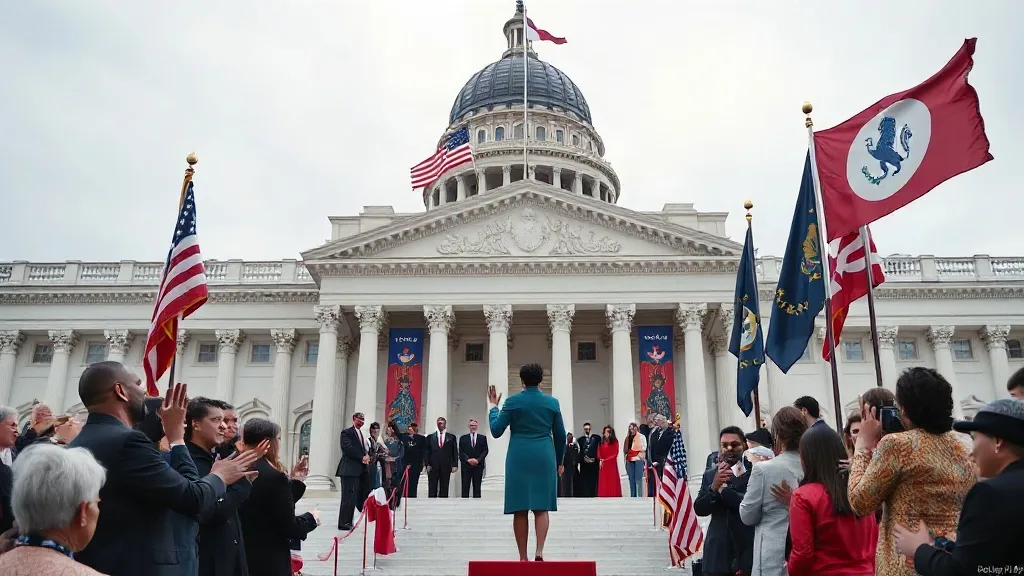
When Keisha Lance Bottoms was sworn in as Georgia's governor, she didn't just make history as the first Black woman to hold that office in the United States. She also carried with her the legacy of Florida A&M University, one of the nation's historically Black colleges and universities (HBCUs). For many, her victory is a testament to the power of these institutions to nurture leaders who break barriers.
A Historic First
Bottoms's path to the governor's mansion is a story of resilience and determination. A graduate of Florida A&M University, she has often spoken about how her alma mater shaped her worldview and instilled in her a sense of purpose. Her election resonates deeply with HBCU advocates who see it as proof that these institutions remain vital engines of Black excellence.
From FAMU to the Governor's Office
Florida A&M, located in Tallahassee, has a long tradition of producing leaders in law, politics, and public service. Bottoms joins a distinguished list of alumni who have made their mark on the national stage. Her journey from student government to city council, mayor of Atlanta, and now governor illustrates the kind of trajectory that HBCUs aim to support.
Why HBCUs Matter in Politics
HBCUs have always been more than just educational institutions. They are incubators of civic engagement, where students learn to advocate for their communities and navigate systems of power. For Black students, these campuses offer a supportive environment that fosters confidence and ambition.
A Pipeline of Black Political Talent
Many of the nation's Black elected officials, judges, and activists trace their roots to HBCUs. The schools provide mentorship, networking opportunities, and a curriculum that emphasizes leadership and service. Bottoms's success is a high-profile example of this pipeline in action.
The Symbolism of the Moment
For young Black women and girls, seeing someone who looks like them in the highest office of a state is profoundly empowering. It sends a message that their aspirations are not only possible but achievable. HBCU advocates argue that this visibility can inspire a new generation to pursue careers in public service.
Challenges and Opportunities Ahead
While Bottoms's election is a milestone, it also comes with immense responsibility. She will govern a state with diverse needs and deep political divisions. Her ability to bridge gaps and deliver results will be closely watched, and her performance may shape perceptions of HBCU-prepared leaders for years to come.
Frequently Asked Questions
Who is Keisha Lance Bottoms?
Keisha Lance Bottoms is a Florida A&M University alum and the first Black woman elected governor in the United States, serving Georgia.
What does HBCU stand for?
HBCU stands for Historically Black Colleges and Universities, institutions established before 1964 with the primary mission of educating Black Americans.
Why is this election significant for HBCUs?
It highlights the role of HBCUs in producing national leaders and serves as an inspiration for current and future students.
How can HBCUs continue to support political leadership?
By maintaining strong civic engagement programs, mentorship networks, and partnerships with policymakers, HBCUs can ensure a steady pipeline of diverse leaders.