
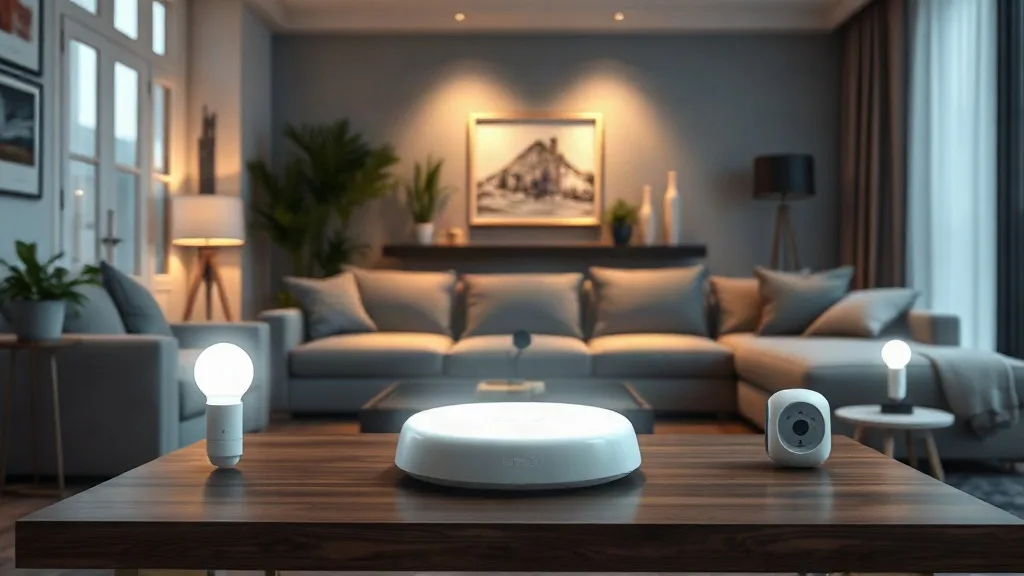
If you've dipped a toe into the smart home pool, you know the frustration: a different app for your lights, another for your thermostat, and yet another for your doorbell. It's death by a thousand notifications. But what if there was a single gadget that could make your dumb house smarter by tying all those disparate devices together? That's the promise of a new class of smart home hubs, and it's gaining traction among homeowners who want convenience without the chaos.
The Problem with Piecemeal Smart Homes
Most of us didn't plan our smart homes; we accumulated them. A smart speaker here, a Wi-Fi plug there. Each purchase added a new app, a new account, and a new set of rules. Before long, your phone is cluttered with icons you barely recognize, and your home is a patchwork of incompatible ecosystems. According to a 2023 survey by Parks Associates, the average smart home has 8.6 connected devices, but only 35% of households use a central hub to manage them. The result? Fragmented control and a lot of unused potential.
What Is a Smart Home Hub?
A smart home hub is a device that acts as a central controller for your smart home devices. It connects to your various gadgets using protocols like Wi-Fi, Bluetooth, Zigbee, or Z-Wave, and allows you to manage them from a single app or voice assistant. Think of it as a universal translator for your smart home, bridging the gap between different brands and technologies.
How a Hub Makes Your Dumb House Smarter
By consolidating control, a hub turns your collection of smart devices into a cohesive system. Here are some key benefits:
- Unified app control: Manage all your devices from one place, eliminating app fatigue.
- Automation and scenes: Create routines that trigger multiple devices at once, like dimming lights and playing music when you say "movie time."
- Local processing: Many hubs process automations locally, meaning they work even when the internet is down, and your data stays in your home.
- Protocol bridging: Connect devices that use different wireless standards, allowing you to mix and match brands.
Key Features to Look For
Not all hubs are created equal. When shopping for one, consider these features:
- Protocol support: Ensure the hub supports the protocols your devices use. Zigbee and Z-Wave are common for sensors and locks, while Wi-Fi and Bluetooth cover many mainstream gadgets.
- Local automation: Prefer hubs that can run routines locally for reliability and privacy.
- Voice assistant compatibility: Check if the hub works with Amazon Alexa, Google Assistant, or Apple HomeKit.
- Matter support: The new Matter standard aims to unify smart home devices, so a hub that supports Matter is more future-proof.
Challenges and Considerations
While a hub can simplify your smart home, it's not a magic bullet. Setup can be fiddly, especially if you have devices from many brands. Some hubs require a wired ethernet connection for best performance, and not all devices are compatible. Additionally, a hub is another device that needs power and occasional updates. But for many, the convenience outweighs the hassle.
The Future of Smart Homes
The smart home industry is moving toward greater interoperability. With the rollout of Matter, we're seeing more devices that can work together out of the box. Hubs are evolving to support these standards, making it easier than ever to build a smart home that just works. As we noted in a previous article on smart home trends, the focus is shifting from individual gadgets to holistic experiences.
Frequently Asked Questions
Do I need a smart home hub if I have a smart speaker?
Not necessarily. Smart speakers like Amazon Echo or Google Nest can control many devices, but they may not support all protocols or offer advanced automation. A hub adds flexibility and local processing.
Can a hub make my old dumb devices smart?
Indirectly, yes. By connecting smart plugs, sensors, or IR blasters to your dumb devices, a hub can integrate them into your smart home system.
What is Matter, and why does it matter?
Matter is a new connectivity standard backed by major tech companies. It aims to make smart devices from different brands work together seamlessly. A hub with Matter support will be more compatible with future devices.
Are smart home hubs secure?
Reputable hubs have security features like encrypted communication and local processing. However, as with any connected device, it's important to keep firmware updated and use strong passwords.