
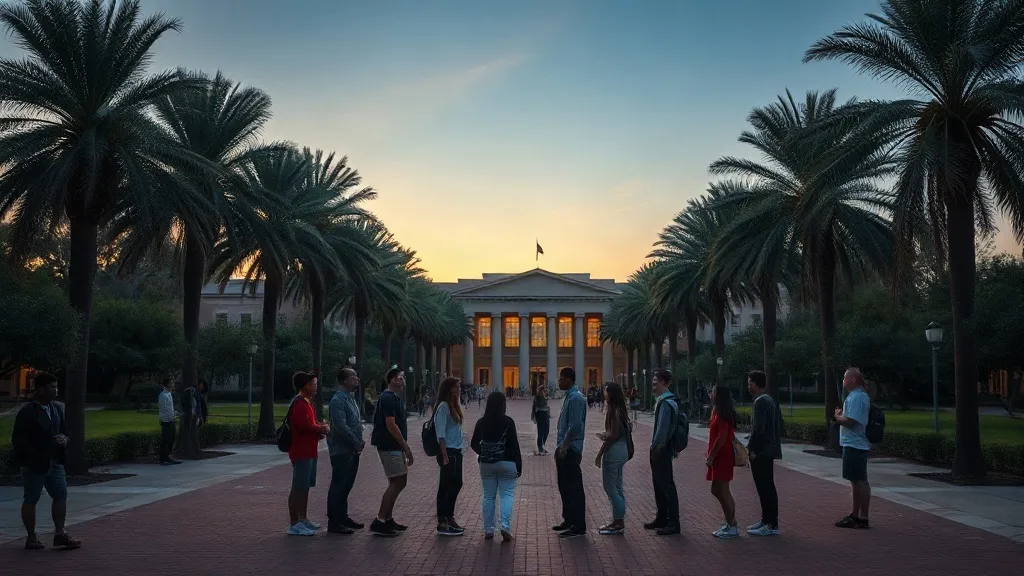
For weeks, the agenda item had been circulating among student advocates and university administrators: a proposed exception to Florida's blanket ban on undocumented students attending its 12 public universities. On Friday, the board that governs the system chose not to decide. The postponement, announced without a new timeline, leaves in place a policy that has reshaped college access in the nation's third-most-populous state and frustrated students who had hoped for a narrow path back to campus.
The rule at issue bars students without lawful immigration status from enrolling at Florida's public universities, even if they have lived in the state for most of their lives and graduated from its high schools. The proposed exception was described as narrow, though officials did not detail its exact contours in the public session. What is clear is that the board's decision to punt keeps the status quo intact for now, and with it a set of difficult choices for students who are already navigating a maze of residency requirements, tuition classifications, and legal uncertainty.
The Stakes Behind the Delay
Florida is not the only state to restrict access to higher education for undocumented students, but its policy is among the most restrictive when it comes to four-year public universities. In practice, that means a student who arrived in the country as a young child, learned English in Florida schools, and earned a diploma from a Florida high school may still be turned away from a state university. The alternative is often a community college or a private institution, each with its own cost and transfer complications.
Advocates argue that the ban wastes talent the state has already invested in. Critics counter that allowing undocumented students would reward unlawful presence and strain public resources. The board's postponement does not resolve that debate; it simply delays a decision that both sides had expected. For students, the delay is not abstract. It means another semester of uncertainty, another round of applications to institutions that may or may not have a place for them, and another season of waiting for a signal from Tallahassee.
The Board of Governors, which oversees the state's public university system, has been under pressure from multiple directions. Some university presidents have quietly signaled support for a limited exception, particularly for students who are already enrolled in Florida's K-12 system or who have earned associate degrees at state colleges. Others worry about legal exposure and political backlash. The board's decision to postpone suggests that a majority was not yet ready to take that step, or that the votes simply were not there.
What the Postponement Means for Students
For students directly affected, the practical impact is immediate. Those who had been preparing applications for the spring or fall terms now face a familiar choice: proceed with backup plans or wait for a decision that may not come in time. High school counselors in districts with large immigrant populations report that the ambiguity itself is demoralizing. Students who have done everything asked of them, they say, are being asked to put their futures on hold while adults debate procedure.
The postponement also affects families who have already made financial sacrifices based on the assumption that a public university was within reach. Out-of-state or international tuition rates can be prohibitive for undocumented students, and without access to in-state tuition or state financial aid, many find the numbers simply do not work. The proposed exception was not a full fix, but it was seen as a foothold, a way for a small number of students to attend a public university without upending the broader policy.
University administrators, meanwhile, are left to interpret the board's silence. Some campuses have established resource centers and advising programs for undocumented students, but they operate in a gray zone. They can provide information and support, but they cannot change admissions rules. The delay means those programs will continue to operate without a clear answer about whether their students will ever have a shot at the flagship institutions in their own state.
The Broader Policy Landscape
Florida's approach is part of a patchwork of state policies across the country. Some states allow undocumented students to pay in-state tuition and even access state aid, while others bar them from public institutions altogether. The result is a national map of uneven opportunity, where a student's zip code can determine whether a public university is a realistic option. Florida's policy is notable not only for its restrictiveness but for the fact that it applies to a state with one of the largest undocumented populations in the country.
The board's postponement also comes amid a larger national conversation about immigration and education. Colleges and universities have been reevaluating their roles as engines of mobility, and the question of who gets to enroll is central to that debate. For Florida, the decision to wait means the state will continue to be a case study in what happens when access is limited by immigration status. Researchers and policy analysts will be watching closely, not just for the outcome but for the process, which has been marked by closed-door discussions and limited public explanation.
It is worth noting that the proposed exception was never described as a pathway to broad access. It was, by all accounts, a narrow carve-out, perhaps for students in specific programs or with particular credentials. That narrowness may have been part of its political appeal, but it also underscores how far the debate has shifted. A generation ago, the question might have been whether to offer in-state tuition; today, it is whether to allow any enrollment at all.
What Happens Next
The board has not announced when it will revisit the issue. In the meantime, students and advocates are left to press their case through other channels, including the legislature and individual university boards. Some are calling for a clearer statement of the board's intentions, arguing that even a negative decision would be preferable to indefinite uncertainty. Others are urging the board to adopt a temporary exception while it studies the matter further.
For now, the policy remains as it was: undocumented students are barred from Florida's public universities, with no exception in place. The postponement is a setback for those who had hoped for change, but it is not necessarily the end of the road. Boards revisit policies, politics shift, and lawsuits can force the issue. What is certain is that the students at the center of this debate will continue to make decisions about their futures with incomplete information, which is perhaps the most frustrating outcome of all.
Frequently Asked Questions
What exactly did the Florida Board of Governors postpone?
The board postponed a vote on a proposed narrow exception to the rule that bars undocumented students from attending Florida's 12 public universities. The exception would have allowed some students to enroll under specific conditions, though the details were not fully public.
Does this mean undocumented students can now apply to Florida public universities?
No. The existing ban remains in effect. The postponement means the board has not changed the policy, so undocumented students are still barred from enrolling at public universities in the state.
Why is this decision significant for Florida students?
Florida has one of the largest undocumented populations in the country, and many of these students have grown up in the state and attended its schools. The ban limits their access to higher education and can force them into alternative paths that are often more expensive or less aligned with their goals.
When will the board take up the issue again?
The board has not announced a timeline for revisiting the proposal. Advocates are urging the board to set a date and provide clarity, but for now the issue remains unresolved.
How does Florida's policy compare to other states?
Florida is among the more restrictive states. Some states allow undocumented students to pay in-state tuition and access state financial aid, while others, like Florida, bar them from public universities altogether. The result is a patchwork of policies across the country.